


Views: 0 Author: Site Editor Publish Time: 2026-10-08 Origin: Site


Retail packaging operates as a highly sensitive engineered system rather than a single standalone unit. You cannot treat these components as isolated items during procurement. Mismatched components inevitably lead to accelerated product shrinkage on the shelf. They cause frequent, frustrating wrapping machine jams in the packing room. They also create exceptionally poor shelf appeal in the produce aisle. Correctly configuring the tray, pad, and film directly protects retail margins. A cohesive setup extends fresh shelf life significantly. It maintains vital visual clarity for the consumer. It also ensures critical structural integrity during complex transit routes and prolonged display periods. This guide provides a straightforward technical evaluation framework. It helps you standardize retail produce packaging systems effectively. You will learn how to pair different materials seamlessly. We help eliminate guesswork from your daily packaging operations.
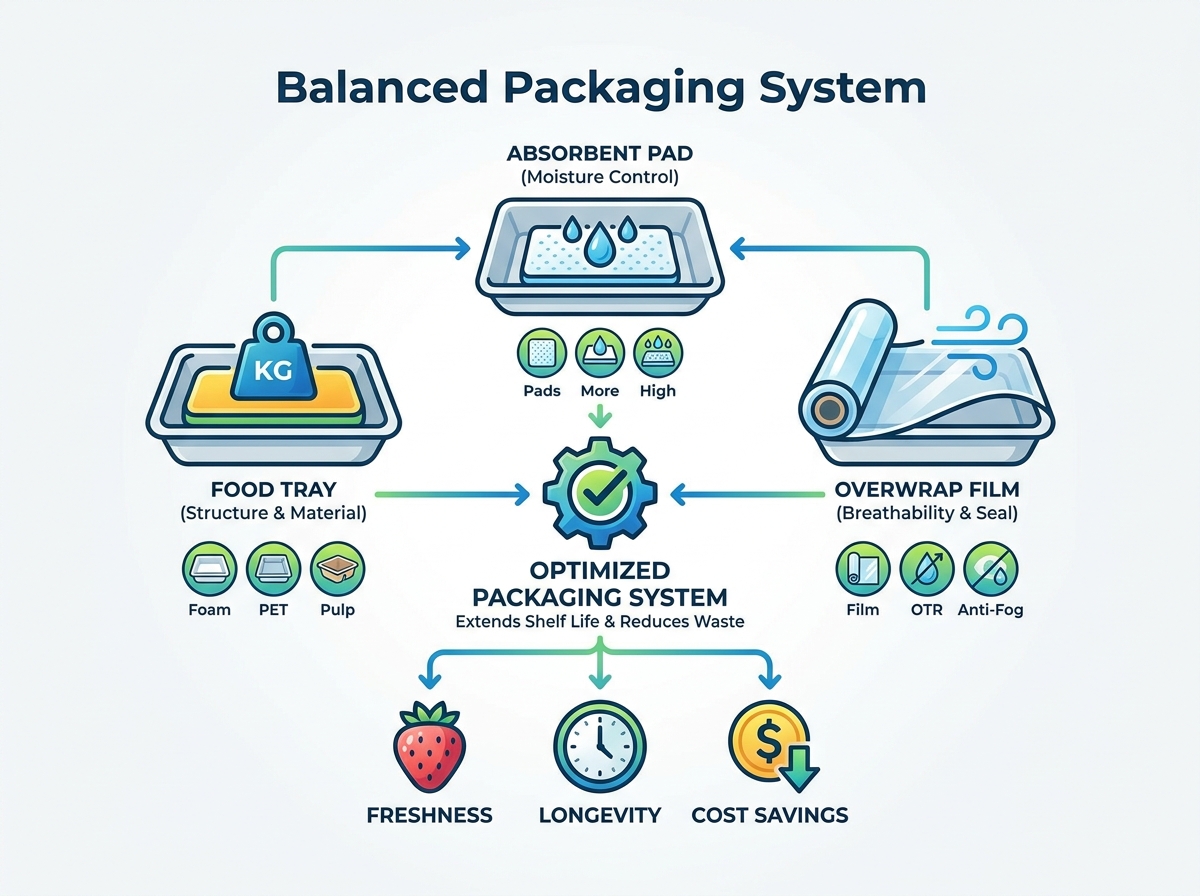
Effective produce packaging requires balancing material breathability (OTR), moisture management, and structural rigidity.
Food trays must be selected based on the weight, moisture content, and merchandising orientation of the specific produce.
Fresh produce absorbent pads must match the exudate volume of the product without dehydrating it.
PVC cling film for produce display must align with the tray material to ensure proper heat-sealing and runnability on automated wrapping lines.
We often see retailers underestimate the impact of poorly paired packaging. This oversight drives up operational expenses rapidly.
Inadequate moisture control creates perfect micro-environments for mold. Bacterial strains like Pseudomonas accelerate when trapped liquids pool. You must match pad capacity accurately to the produce type. Low-breathability film suffocates fresh items. Fresh vegetables continue to respire long after harvesting. They need constant oxygen exchange to survive. If you trap carbon dioxide, the produce ferments. Anaerobic conditions cause rapid decay, softening, and highly unpleasant off-odors.
Incompatible film and tray combinations disrupt daily packing operations. They cause frustrating downtime on automated wrapper lines. Poor seal memory prevents tight wraps, leading to loose packages. Film tearing halts production completely. Operators lose valuable hours resetting jammed machinery and clearing debris. Every minute of wrapper downtime degrades your operational throughput. Semi-automated hand wrappers also struggle when heat-seal profiles do not match the tray material perfectly.
Consumer purchase decisions rely heavily on immediate visual cues. Shoppers quickly bypass packages showing fogged film. They reject items sitting in unappetizing pooling liquids. Deformed trays suggest improper handling or old stock. Presentation degradation directly impacts your daily sell-through rates. Premium produce demands pristine visual clarity. If your packaging system fails visually, your brand reputation suffers alongside your margins. Customers simply buy their fresh goods elsewhere.
Selecting the right food trays forms the structural foundation of your system. You must balance physical requirements against environmental goals.
Expanded polystyrene (EPS) remains highly popular in traditional retail environments.
Pros: They are highly cost-effective and exceptionally lightweight. They provide excellent impact absorption during transit. We strongly recommend them for easily bruised items like peaches, plums, or delicate tomatoes.
Cons: They face increasing regulatory scrutiny globally. Many municipalities ban them entirely from retail shelves. They carry a generally poor sustainability profile because local facilities rarely recycle them.
Polyethylene terephthalate (PET) offers a modern, rigid alternative.
Pros: They boast high structural integrity for heavy stacking. Facilities recycle them easily. They deliver excellent clarity when you use transparent variants. Consumers love inspecting the bottom of the produce before buying.
Cons: They can become brittle under extreme cold conditions. Cold-cracking ruins the package seal. They also require specific film sealants to close securely.
Molded fiber appeals heavily to eco-conscious shoppers and organic brands.
Pros: They possess high sustainability appeal. They offer a beautiful, natural aesthetic for premium organic lines. They compost easily after consumer use.
Cons: Uncoated fiber acts as a sponge. It can draw moisture directly from the produce. This dehydrates the item prematurely. You will also experience variable adhesion when applying standard overwraps.
You must match the tray material to the product weight. Heavy watermelons require rigid PET to prevent bowing. Delicate berries need softer cushioning. Consider the required shelf life for the specific portion size. Stackability impacts your freight efficiency. Always verify local compliance requirements before committing to a massive material purchase.
Moisture management dictates ultimate shelf life. Fresh produce absorbent pads play a critical role in preserving product texture.
Buyers must calculate pad absorbency carefully. Manufacturers measure this capacity in milliliters (ml). You must base this calculation on specific respiration rates. You also must evaluate the moisture release rates of the produce. Cut melon releases significantly more liquid than whole blueberries. Over-specifying a pad can dehydrate delicate fruit rapidly. Under-specifying leaves pooling water at the bottom.
You must differentiate between absorption technologies. Standard cellulose pads provide passive absorption. They hold liquid much like a basic paper towel. Under pressure, they release the liquid back out. Super-absorbent polymer (SAP) pads offer active absorption. They lock liquids securely into a cross-linked gel. SAP pads prevent re-wetting if the package tips over during transport.
Always verify FDA or EFSA compliance rigorously. Direct food contact demands strict safety validations. This is particularly crucial for pre-cut items like pineapple or mango. Heavily bruised produce also releases juices directly onto the pad. The pad materials must not migrate into the food under any circumstances. Request full migration testing data from your supplier.
Ensure pads remain secured tightly to the tray surface. They must not shift during high-speed automated packing. They need to stay anchored during rough retail handling. Wandering pads look incredibly messy. If the pad slides to the side, it fails to capture liquids effectively.
The overwrap completely seals your protective micro-environment. PVC cling film for produce display offers unique properties tailored specifically for active respiration.
Fresh produce requires specialized, highly breathable films. You cannot use standard meat packaging films for vegetables. High OTR prevents anaerobic spoilage inside the package. We measure OTR in cubic centimeters per square meter per day (cc/m²/day). Vegetables continue breathing on the shelf. If you trap carbon dioxide, lactic acid builds up. The produce rots rapidly from the inside out.
Refrigerated display cases experience constant temperature fluctuations. Shoppers open and close doors repeatedly. Warm store air meets cold case air. Internal anti-fog coatings are an absolute necessity here. They alter the surface tension of water droplets. They maintain crystal-clear visibility. Fogged film completely hides the product and heavily discourages purchases.
You must evaluate stretch capacity and cling strength together. Test heat-seal temperatures carefully across different settings. This ensures compatibility with your existing inline wrapping equipment. Good film memory means the package stays tight. It should not loosen or sag after two days on the display shelf.
We acknowledge the industry shift toward PE-based or compostable films. However, you must note their current performance trade-offs. Alternative films often lack the pristine clarity of traditional PVC. They may also struggle with stretch recovery. They sometimes require higher heat to seal properly. Test these alternatives thoroughly before switching your entire line.
Bringing the tray, pad, and film together requires methodical, documented testing.
Map component combinations precisely by product category. High-moisture, heavy items need completely different setups than low-moisture, delicate items. Build a standard matrix to guide your packing floor.
Produce Packaging Material Compatibility Matrix
Product Category | Recommended Tray | Pad Requirement | Overwrap Type |
|---|---|---|---|
High-Moisture / Heavy (e.g., Cut Melon, Pineapple) | Rigid PET / rPET | High-Capacity SAP Pad | High-Cling Anti-Fog Film |
Low-Moisture / Delicate (e.g., Whole Grapes, Cherries) | EPS Foam or Coated Fiber | Low-Capacity Cellulose Pad | High-Breathability OTR Film |
Premium Organic (e.g., Heirloom Tomatoes) | Molded Fiber / Pulp | No Pad Required (Passive) | Compostable / PE Blend |
Weigh the benefits of single-source procurement carefully against its risks. Buying everything from one vendor guarantees component compatibility. It streamlines your supply chain significantly. However, multi-vendor sourcing often drives piece-part cost optimization. You must balance these competing strategies. Remember, mismatched components quickly erase any upfront material savings through increased waste.
Follow a strict, three-step piloting protocol before final approval.
Runability testing: Run the components on your existing back-of-house wrappers. Check seal integrity at your standard operating speeds. Verify the film cuts cleanly without gumming the heated wire.
Accelerated shelf-life testing: Simulate retail display conditions accurately. Expose the packages to typical light and temperature fluctuations. Measure moisture loss over five days.
Transit simulation: Test tray structural limits under mechanical vibration. Drop the boxes to simulate rough handling. Ensure the pad retains moisture during violent movement.
Successful retail packaging functions purely as a scientifically engineered system. You cannot source these parts in isolation and expect flawless performance. Mismatched materials ruin fresh produce rapidly and stall production lines daily. We strongly advise buyers to request sample kits first. Ask your suppliers for detailed specification sheets and Certificates of Analysis (COAs) for all three components simultaneously. Run rigorous physical line trials. Verify your OTR ratings, check pad capacities, and test tray rigidities thoroughly before committing to a full operational rollout. Taking these disciplined steps protects your brand presentation and your retail margins.
A: Calculate absorbency based on product weight and historical purge rates. Cut fruits release significantly more exudate than whole items. Multiply the expected fluid release per ounce by the total product weight. Select a pad capacity (in ml) slightly above this figure. This prevents unappealing pooling without actively dehydrating the food.
A: Yes, but it presents noticeable adhesion challenges. Uncoated fiber surfaces resist standard film cling. You will likely need film treated with special tackifier additives. You must also adjust heat-seal profiles on your wrapping machinery. Ensure the equipment applies enough heat to bond the film without burning the natural fiber material.
A: Yes, rPET is naturally more brittle than foam. Ambient temperature heavily impacts PET performance. Cold packing rooms drastically increase the risk of cold-cracking. You must specify the correct gauge thickness for your specific automated equipment. Thicker gauges resist impact much better but add overall weight and expense.
A: A properly matched system typically extends shelf life by two to four days. This remains a conservative estimate. It depends heavily on your cold chain integrity. If you maintain strict temperature controls, optimal OTR films and active SAP pads prevent mold growth and moisture loss highly efficiently.


