


Views: 0 Author: Site Editor Publish Time: 2026-07-16 Origin: Site


Sourcing commercial-grade food packaging presents a significant challenge today. You must balance strict regulatory compliance against unit costs. Supply chain reliability also remains absolutely crucial. This guide helps distributors, food processing facilities, and retail chains evaluate potential partners. You need a reliable supplier to protect your brand and margins. Here, we outline how to validate a credible PVC Cling Film manufacturer.
We will clarify what makes a true one-stop OEM solution. You will learn how to verify food-safe claims correctly. We also cover the operational realities involved when switching your primary packaging suppliers. By following these frameworks, you can confidently navigate supplier audits and product testing.
Authentic FDA and CE certifications require verifiable, third-party lab testing, not just supplier claims; BPA-free and food-grade designations must trace back to raw material sourcing.
Evaluating a PVC cling film manufacturer requires looking beyond price to specific technical metrics: anti-fog performance, elongation rates, and batch-to-batch thickness consistency.
A genuine one-stop OEM partner manages the entire pipeline—from custom formulation (e.g., specific tackiness) to retail-ready private label packaging (imperial/metric sizing, custom cutter boxes).
Mitigating supply chain risk involves staged rollouts: starting with specification audits, moving to pilot sampling, and culminating in standardized Service Level Agreements (SLAs).
Unverified supplier claims carry immense operational risk. Distributors face severe legal liabilities if non-compliant films contaminate food products. Chemical migration can ruin entire batches of fresh produce or meat. Product recalls damage brand reputations permanently. They also trigger heavy financial penalties from retail partners. You must treat compliance as your primary filter. Never accept verbal assurances regarding food safety standards.
The FDA strictly regulates Food Contact Substances (FCS). PVC films fall directly under these federal guidelines. You must request independent, third-party migration test reports. These reports confirm chemical transfer remains below acceptable limits. Ask your supplier for detailed testing documentation. The lab results should reference specific FDA Title 21 CFR regulations. Legitimate factories will provide these documents readily upon request.
Selling into the European market requires stringent compliance. CE marking denotes adherence to baseline European safety standards. However, PVC materials also require strict REACH compliance. REACH regulations limit Substances of Very High Concern (SVHC). You must also enforce Phthalate-free and BPA-free mandates. Ask suppliers for comprehensive declarations of conformity. These documents prove compliance across all European regulatory frameworks.
A reliable supplier maintains complete product traceability. They must provide a documented chain of custody. This documentation tracks raw polymers and plasticizers back to their origin. If a contamination issue occurs, traceability isolates the exact batch. You can then contain the problem quickly. Strong traceability indicates a highly disciplined manufacturing environment. It separates premium OEM partners from basic commodity brokers.
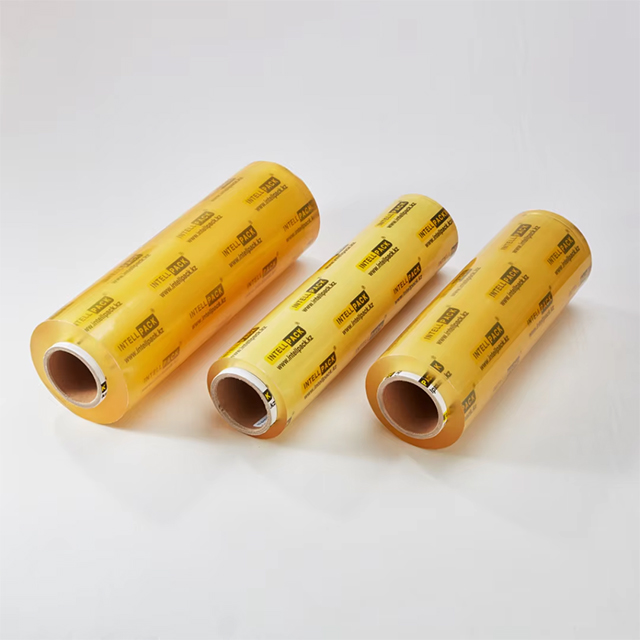
Price alone cannot dictate your procurement strategy. Evaluating potential partners requires deep technical scrutiny. Your packaging must perform flawlessly under demanding commercial conditions.
Technical Metric | Optimal Standard | Primary Application Benefit |
|---|---|---|
Anti-Fog Performance | Clears within 2 minutes at 4°C | Maintains product visibility in cold displays. |
Elongation Rate | 200% - 300% | Prevents tearing and reduces material waste. |
Thickness Tolerance | ± 5% micron variance | Ensures consistent wrapping machine performance. |
Adhesion (Cling) | High tray tack, low unwind force | Secures the package without jamming equipment. |
Cold storage environments challenge standard plastic wraps. Temperature changes cause rapid condensation inside the package. Specialized polymer additives solve this issue. These additives alter the surface tension of the film. Water droplets spread into a thin, transparent layer instead of fogging. This anti-fog technology remains critical for supermarkets. It keeps meat and fresh produce displays highly visible to consumers.
When supplying supermarkets and fresh produce distributors, optical clarity in cold display cases is just as important as chemical compliance. Temperature differentials in refrigerated chains often cause condensation, ruining product visibility and accelerating food spoilage.
To demonstrate the superior performance of our certified PVC cling film, we conducted a continuous 5-day cold-storage test from August 13 to August 18, wrapping fresh mushrooms in standard food trays across three distinct sub-zero temperature zones:
Left Tray (-5°C): Maintains exceptional optical clarity with minimal condensation. The specialized anti-fog formulation keeps the film surface crystal clear for instant retail inspection.
Middle Tray (-10°C): Displays stable anti-fog activation under deeper chilling. Micro-droplets spread evenly into an invisible, continuous water layer without obstructing the view of the contents inside.
Right Tray (-15°C): Demonstrates robust low-temperature endurance. Even at a freezing -15°C, the film prevents heavy frost accumulation and preserves high-definition visibility.

Why This Matters for Your Supply Chain: Our proprietary anti-fog additive technology lowers surface tension, ensuring that whether your products sit in a chilled supermarket display or a deep cold-storage unit, the packaging never fogs up. This direct visual appeal drives higher retail turnover and eliminates customer complaints regarding obscured produce.
Commercial kitchens and automated wrappers demand durable materials. Elongation defines how far the film stretches before breaking. Acceptable stretch rates generally fall between 200% and 300%. High tensile strength ensures the film wraps tightly around sharp tray corners. It prevents puncture wounds from bones or rigid stems. Optimal elongation significantly minimizes daily material waste on the packing floor.
Food wrap must exhibit intelligent auto-adhesion. It should stick securely to EPS foam trays or ceramic bowls. However, it should not aggressively stick to itself on the roll. We call this balancing high tack and low unwind force. Poorly formulated films leave chemical adhesive residues on containers. A top-tier factory formulates tackiness internally without compromising food safety.
Inconsistent micron thickness plagues the budget packaging industry. Operators often face "short-rolling" tactics from unverified suppliers. This means the roll contains less footage than advertised. Thickness variations also cause wrapping machines to jam frequently. You must mandate strict tolerance limits in your supplier contracts. Demand continuous inline thickness monitoring during the extrusion process.
Different foods require entirely different physical packaging traits. Fresh mushrooms need high-breathability films. This prevents rapid spoilage and moisture rot. Conversely, raw poultry demands high-barrier properties. A mature factory adjusts polymer formulations based on your specific end-use application. They engineer the exact permeability required for your target product category.
Catalog Standardization: Translating commercial catalog standards requires precision. Terms like "Clear, 750, Case" must map perfectly to manufacturing runs.
Custom Configurations: OEM partners offer custom core sizes and branded cartons. They adapt to your specific retail display needs.
Dispensing Solutions: High-end solutions include specialized slide-cutters. You can also request perforated rolls for rapid commercial kitchen use.
Your supplier must accommodate sudden seasonal volume spikes. Holiday seasons typically stress packaging supply chains. Evaluate the factory's total extrusion capacity before signing contracts. Ask how they handle sudden order increases. A robust OEM partner absorbs these spikes smoothly. They maintain standard lead times without sacrificing quality control.
Inconsistent production runs destroy downstream operational efficiency. You must evaluate a factory’s internal QA/QC processes thoroughly. ISO 9001 adherence provides a strong foundational baseline. Look for facilities utilizing automated inline thickness monitors. These laser-guided systems detect micron variations instantly. They allow operators to correct extrusion errors before shipping defective rolls.
A factory is only as reliable as its upstream suppliers. Manufacturers depend heavily on chemical additive providers. Anti-fog agents and specialized plasticizers require steady supply chains. Discuss these relationships during your initial supplier audit. Strong ties to premium chemical providers ensure final product stability. These relationships also protect you from sudden, extreme pricing fluctuations.
Shipping heavy, dense rolls globally presents logistical hurdles. Freight expenses easily erode your planned profit margins. You must optimize container space meticulously. Discuss pallet configurations early in the negotiation phase. Maximizing the number of rolls per container reduces landed costs per unit. Experienced export manufacturers will guide you through these load optimization strategies.
Document Auditing: Begin by requesting comprehensive compliance paperwork. Verify the Certificate of Analysis (COA) for recent batches. Cross-check all FDA and CE testing documents. Request recent factory audit reports from recognized third parties.
Pilot Sampling: Never rely on simple desk evaluations. Design a rigorous field test for incoming samples. Run the material through actual automated wrapping machines. Distribute rolls to commercial kitchens to gather real-world operator feedback.
Trial Orders and MOQs: Negotiate terms for an initial trial order. Use a lower Minimum Order Quantity (MOQ) initially. This validates production timelines and packaging accuracy. Secure successful trial runs before committing to large annual contracts.
Partnering with a certified packaging facility represents a strategic risk-management decision. It goes far beyond a simple unit pricing exercise. Authentic compliance, technical consistency, and supply chain transparency protect your entire operation. We recommend taking immediate, actionable next steps. Define your internal product specifications clearly today. Request technical data sheets (TDS) alongside physical samples for testing. We invite procurement teams to request a full compliance package and schedule a comprehensive OEM consultation to secure your supply chain.
A: Always request specific third-party test reports rather than generic certificates. Verify the testing agency is globally recognized, like SGS or Intertek. You can often check the certification numbers directly on the testing agency's official database. Legitimate manufacturers will readily provide full migration test results.
A: Industry baselines usually require one standard 20-foot container for initial OEM orders. However, MOQs heavily depend on your packaging requirements. Custom printed cutter boxes require separate printing plates, which often push MOQs higher to justify the initial setup costs.
A: Yes. Mature factories possess the tooling to produce dual standards. They can manufacture rolls based on imperial measurements, such as inches and feet, for North American markets. They also produce exact metric dimensions tailored for European and Asian distribution networks.
A: A standard transition typically takes 45 to 60 days. This timeline covers initial sample approval, finalizing physical specifications, and plate-making for custom printed packaging. Once the initial setup concludes, subsequent container loading usually drops to a 20-to-30-day production cycle.


