


Views: 0 Author: Site Editor Publish Time: 2026-07-23 Origin: Site


Scroll through any culinary forum today, and you will inevitably find intense debates about heating plastic wrap. Consumer fear runs high regarding plastic, high heat, and food safety. Many people worry about toxic chemicals leaching into their daily meals. This widespread confusion creates a difficult landscape for commercial buyers. Food service operators face very real challenges here. Liability, regulatory compliance, and end-user safety depend entirely on proper material selection. You must understand accurate application limits to protect your customers. Misunderstanding these limits easily exposes brands to serious health risks and recalls. We need to move beyond internet myths. This article provides a data-backed, compliance-focused analysis. We examine this issue directly from the perspective of a commercial packaging facility. You will learn the science of heat thresholds, global regulatory rules, and safer application methods for professional kitchens.
Heat Thresholds Matter: Food-grade PVC is generally safe for ambient and warm applications but poses chemical migration risks if subjected to high direct heat (e.g., steaming or high-wattage microwaving).
Plasticizer Formulation is Key: Modern, compliant PVC cling film uses heavily regulated, non-toxic plasticizers (like DOA) instead of legacy, banned phthalates.
Application Dictates Sourcing: Commercial kitchens must differentiate between PVC (superior stretch and barrier for display/storage) and PE (better suited for direct high-heat applications).
Supplier Scrutiny: Partnering with a certified manufacturer guarantees FDA/EFSA compliance and prevents supply chain contamination.
Many consumers confuse a material's melting point with its migration point. You must clearly define the critical difference between these two metrics. The melting point of polyvinyl chloride is quite high. It typically exceeds 100°C depending on the blend. However, the migration point is significantly lower. Migration happens when chemical additives detach from the plastic structure. They move directly from the packaging into your food. PVC does not need to melt for plasticizers to migrate. Heat acts as a powerful catalyst for this chemical transfer. High-fat foods accelerate this process even further. Fats act as a solvent, pulling plasticizers out of the film at elevated temperatures.
Professional kitchens must respect specific safe operating temperatures. Standard commercial PVC wrap handles ambient storage and chilled displays perfectly. For routine food holding and display applications, the generally accepted safe operating threshold sits between 70°C and 80°C (158°F to 176°F).
However, when it comes to commercial packaging operations, supermarket staff rely heavily on hand-held hot plates or automated wrapping machines.
The surface temperature of a commercial heat-sealer typically ranges between 100°C and 140°C (212°F to 284°F). High-grade food-grade PVC is engineered to remain structurally stable when contacting this heating source for only a fraction of a second to a few seconds. Once food temperatures or thermal exposure exceed these practical limits—such as prolonged exposure to boiling water or direct steam—migration risks escalate sharply. Kitchen staff and industrial operators must monitor these temperature limits closely.
Raw polyvinyl chloride is naturally rigid and brittle. It requires additives to function as a wrapping material. Food-grade PVC achieves its signature "cling" and stretch through specific plasticizers. These chemicals wedge themselves between rigid polymer chains. This makes the final film highly flexible and sticky. Historically, the industry relied heavily on DEHP for this purpose. Global regulators eventually recognized the health risks associated with DEHP. The industry has since shifted away from these harmful substances. Modern, compliant films use heavily regulated, food-safe alternatives. Di-2-ethylhexyl adipate (DOA) is currently a standard, safe plasticizer. It delivers excellent stretch without compromising human safety.
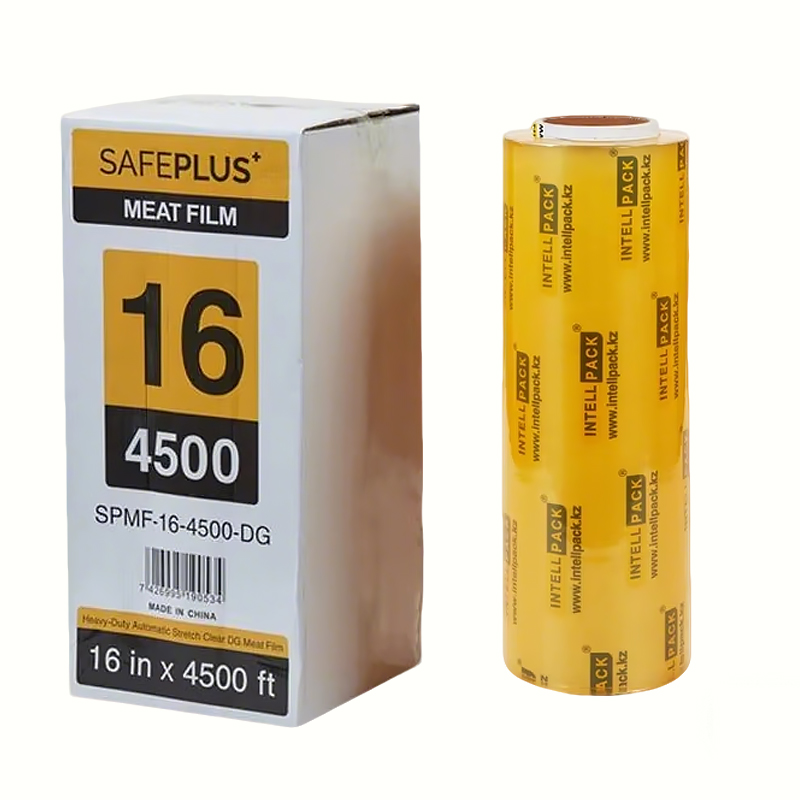
Global regulatory agencies enforce strict guidelines for food contact materials. The United States Food and Drug Administration regulates these films under Title 21 CFR. The European Food Safety Authority manages similar standards through Regulation (EU) No 10/2011. Both agencies mandate rigorous chemical testing protocols. Manufacturers must subject their materials to specific migration testing criteria. Independent labs use specialized food simulants during these tests. They use olive oil to simulate fatty food interactions. They use ethanol or acetic acid to test acidic food reactions. These comprehensive tests ensure global compliance across all food categories.
Consumers frequently look for the "microwave-safe" label. Earning this designation requires an extensive, highly controlled testing process. Manufacturers must prove their film remains stable under intense electromagnetic heat. Even with this label, a standard regulatory caveat always applies. Users must leave a minimum 1-inch gap between the film and the food. The film should never touch the food surface directly during microwaving. Foods like heavy gravy or melted cheese heat unevenly. They easily reach temperatures well above 100°C. Direct contact with these super-heated spots causes localized melting and severe plasticizer migration.
Material sourcing carries immense liability for commercial distributors. Buying uncertified, "grey-market" film exposes businesses to catastrophic risks. Unverified suppliers often skip expensive independent lab testing. They might secretly use cheaper, banned legacy plasticizers to cut costs. This directly exposes distributors and food service brands to massive compliance failures. If harmful chemicals migrate into consumer food, public health authorities will intervene. This leads to expensive product recalls and destroyed brand reputations. Distributors must always demand transparent, up-to-date compliance documentation before purchasing.
PVC remains the dominant choice for many specific kitchen applications. It offers unique physical properties unmatched by other plastics.
Best Outcomes: PVC excels in cold storage environments. It provides unmatched performance for ambient display cases. Commercial prep stations rely on its superior stretch and tight grip. It creates a highly effective oxygen and moisture barrier. This extends product shelf life significantly.
Limitations: You must respect its thermal boundaries. We do not recommend PVC for prolonged steaming or boiling. It is highly unsuitable for direct contact with hot, high-fat foods. Kitchens should never use it inside commercial pressure cookers.
Polyethylene serves as the primary alternative for high-heat scenarios. It possesses a completely different molecular structure and chemical profile.
Best Outcomes: PE boasts a much higher heat tolerance. It is fundamentally safer for direct microwave contact. It handles steaming applications exceptionally well. Consumers often reference a standard 15-minute steam test for PE safety. It easily passes this rigorous test without chemical leaching.
Limitations: PE lacks the aggressive chemical cling of PVC. It features a lower stretch ratio. It provides an inferior oxygen barrier for long-term storage. Kitchens often experience a higher usage rate per wrap because it does not stretch as far.
Buyers need a clear framework to choose the correct material. You should base this decision on your primary operational requirements. Review the material selection comparison below.
Material Selection Decision Matrix
Feature / Requirement | PVC (Polyvinyl Chloride) | PE (Polyethylene) |
|---|---|---|
Primary Operation Need | Shelf-life extension, tight display wrapping | Thermal processing, microwave reheating |
Heat Tolerance | Low to Moderate (up to 80°C) | High (safe for direct steam/microwave) |
Cling and Stretch | Excellent (maximum grip on varied surfaces) | Poor to Moderate (often requires overlapping) |
Oxygen/Moisture Barrier | Superior | Inferior |
Plasticizer Content | Requires food-safe plasticizers (DOA) | Naturally flexible (no plasticizers needed) |
Professional kitchens operate in fast-paced, high-heat environments. Restaurants must utilize PVC safely to maintain health standards. Chefs frequently wrap stainless steel hotel pans to trap heat. The key safety rule involves the airspace above the food. The film stretches tightly over the pan edges. It never touches the hot liquid or food inside. This creates a safe steam barrier without direct chemical contact. If the film sags and touches hot soup, staff must replace it immediately. Proper tension prevents migration risks entirely.
Barbecue pitmasters frequently utilize unique resting techniques for smoked meats. They wrap hot brisket in specialty films to retain moisture. This practice requires strict temperature protocols to remain safe. Professional pitmasters never wrap meat immediately after pulling it from the smoker. They let the meat drop in temperature first. The internal temperature must fall below the critical 80°C (176°F) threshold. Once the meat cools sufficiently, they apply specific food-grade films. This strategic delay prevents chemical leaching. It ensures the meat stays juicy without absorbing plasticizers.
Commercial kitchens must implement aggressive operational training points. You must prevent staff from misusing PVC in high-heat scenarios. Follow these specific risk mitigation steps:
Color-Code Materials: Use different colored dispenser boxes for PE and PVC rolls. This provides a visual cue for kitchen staff.
Enforce the 1-Inch Rule: Train line cooks to always leave a 1-inch gap when microwaving prepped items.
Ban Direct Steam Contact: Prohibit the use of PVC for wrapping tamales, dumplings, or vegetables during active steaming.
Monitor Resting Stations: Equip carving stations with instant-read thermometers. Staff must verify temperature drops before wrapping hot roasts.
You must demand total transparency from your supply chain partners. A reputable supplier readily provides accessible third-party migration test reports. These reports cannot just test simple water contact. They must specifically test against fatty and acidic food simulants. Olive oil simulants prove the material resists fat absorption. Acetic acid simulants prove the material withstands acidic environments. If a supplier hesitates to share recent lab reports, you should walk away immediately.
Safety begins with the chemical recipe itself. A reliable PVC Cling Film manufacturer will transparently state their material blend. They will disclose the exact plasticizers and stabilizers used in their proprietary formulation. While the exact ratios remain a trade secret, the chemical names must be public. You need written assurance they exclusively use FDA-approved additives like DOA. They must explicitly guarantee their products contain zero phthalates or banned DEHP compounds.
Excellent chemical formulations mean nothing in a dirty factory. You must look for baseline operational authorities when auditing a supplier. Demand proof of active ISO 9001 certifications. This guarantees they follow strict quality management systems. Furthermore, look for food safety credentials like BRC and HACCP. These certifications ensure highly hygienic manufacturing environments. They prove the factory actively monitors for biological and physical contamination during production.
Commercial packaging requires highly specific dimensions and tolerances. Evaluate a supplier’s ability to adjust physical product characteristics. Can they customize the film thickness for heavier catering platters? Can they alter the stretch ratios based on your specific automated wrapping machinery? Standard consumer rolls fail in high-volume industrial environments. Your supplier must offer customized roll lengths, core sizes, and perforation options. This flexibility ensures seamless integration into your existing operational workflow.
Heated PVC cling film is fundamentally safe, but only within strict, well-defined temperature parameters. We have established that high direct heat, especially alongside fatty foods, triggers dangerous plasticizer migration. Operational guidelines are not just suggestions; they are vital safety mandates. Your kitchen staff must understand the boundaries between ambient wrapping and thermal processing.
Remember that end-user safety always begins at the sourcing stage. Buying uncertified materials exposes your entire operation to severe regulatory and health liabilities. You must actively partner with transparent, certified manufacturers to guarantee compliance.
Take immediate action to secure your supply chain. We invite all commercial buyers to contact their current suppliers today. Request updated technical data sheets (TDS) and independent compliance certificates. Alternatively, request physical product samples from new certified vendors to evaluate material quality and safety firsthand.
A: Yes, if the product is explicitly labeled microwave-safe. However, you must strictly prevent the film from touching the food. Always leave at least a 1-inch gap. Direct contact with super-heated spots, especially in fatty items, causes localized melting and plasticizer migration.
A: No. Legitimate, modern commercial food-grade PVC uses safe, FDA-approved plasticizers. The industry has largely replaced toxic phthalates like DEHP with heavily regulated, non-toxic alternatives like DOA to ensure complete food safety compliance.
A: It is highly not recommended. The intense, prolonged heat of direct steaming easily exceeds the safe temperature threshold of PVC. PE (Polyethylene) or PVDC film represents the scientifically sound, safer choice for direct steam applications.
A: You must directly check their documentation. Ask them to provide current FDA or EFSA declarations of compliance. Furthermore, demand to see independent, third-party migration testing certificates that specifically utilize fatty and acidic food simulants.
Have questions about food-grade safety standards for your market? Contact us now!


